
Player profile
Orbi
An AGPL-3.0 or Sustainable Use License 1.0 runner that takes a GitHub Issue labeled ai-ready, implements it in a git worktree with Pi, and merges only after a separate review session and a merge gate.
Profile
Where it fits
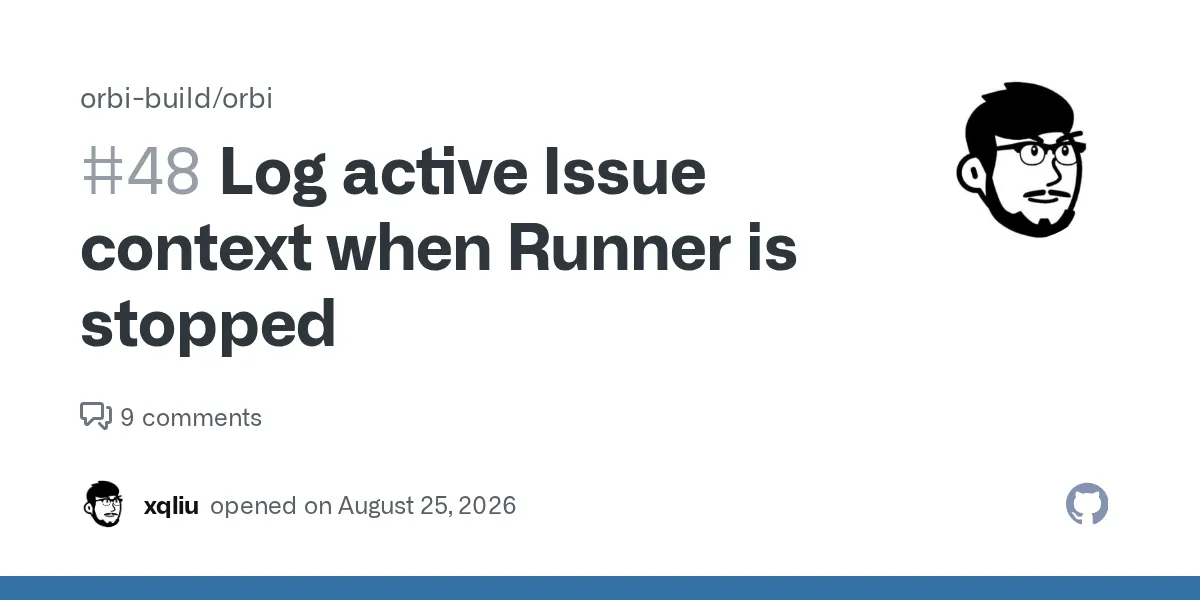
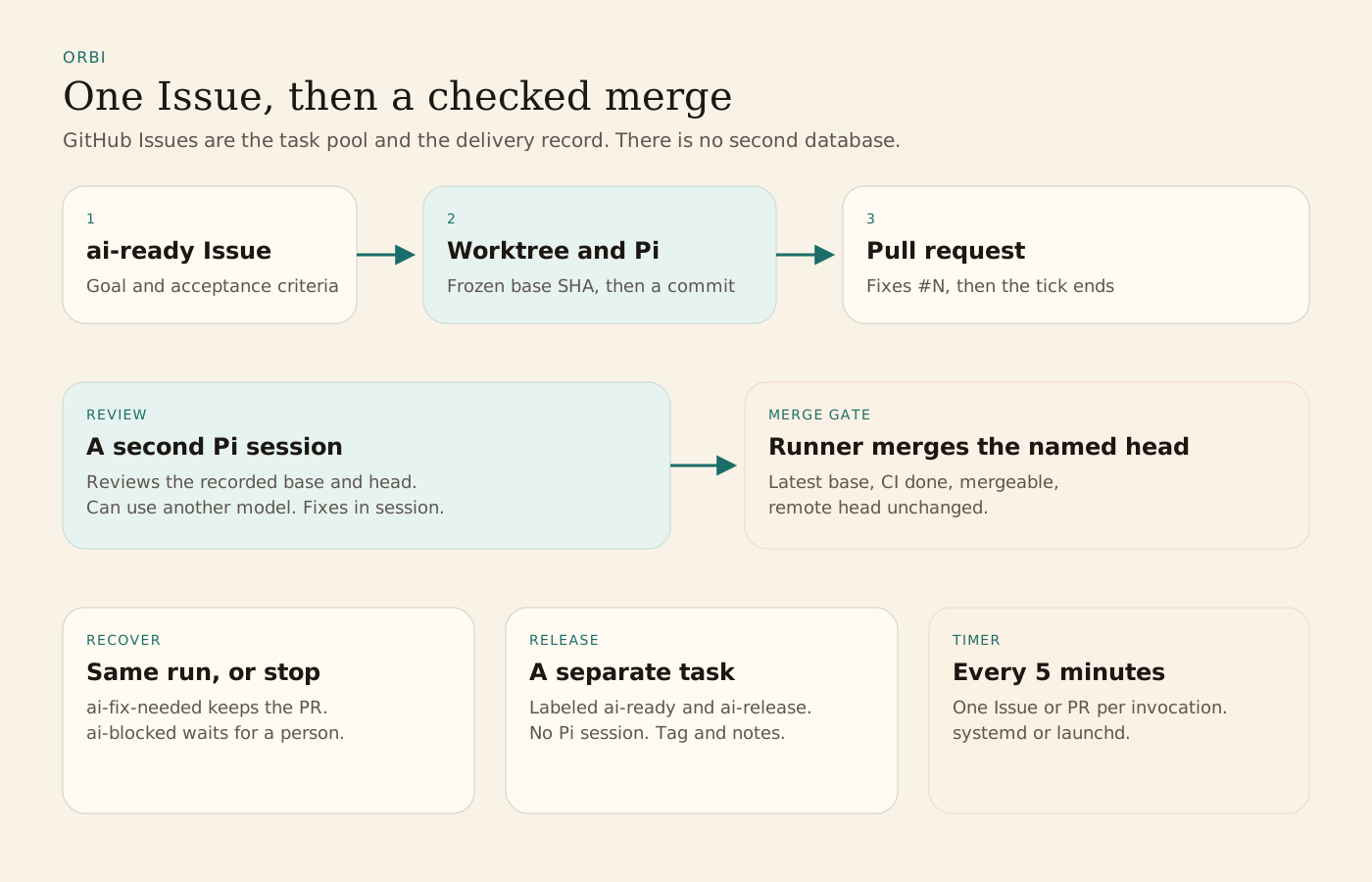
Orbi is a Python runner for GitHub repositories. You write the goal and the acceptance criteria in an Issue and add the label ai-ready. The Runner claims it, creates a feature branch and an isolated worktree from a frozen origin base SHA, and starts a Pi session that plans, implements, tests, and stops at a commit. The Runner then syncs the base, pushes, and opens a pull request whose body includes Fixes #N. Install needs Python 3.14 or newer. The PyPI package is orbi-cli and the command stays orbi. orbi setup checks an existing gh login, the labels, and the scheduler units. The scheduler is a systemd user timer on Linux, or a launchd GUI timer on macOS. The README says the macOS path is not yet verified on real hardware. GitHub CLI 2.94 or newer is required.
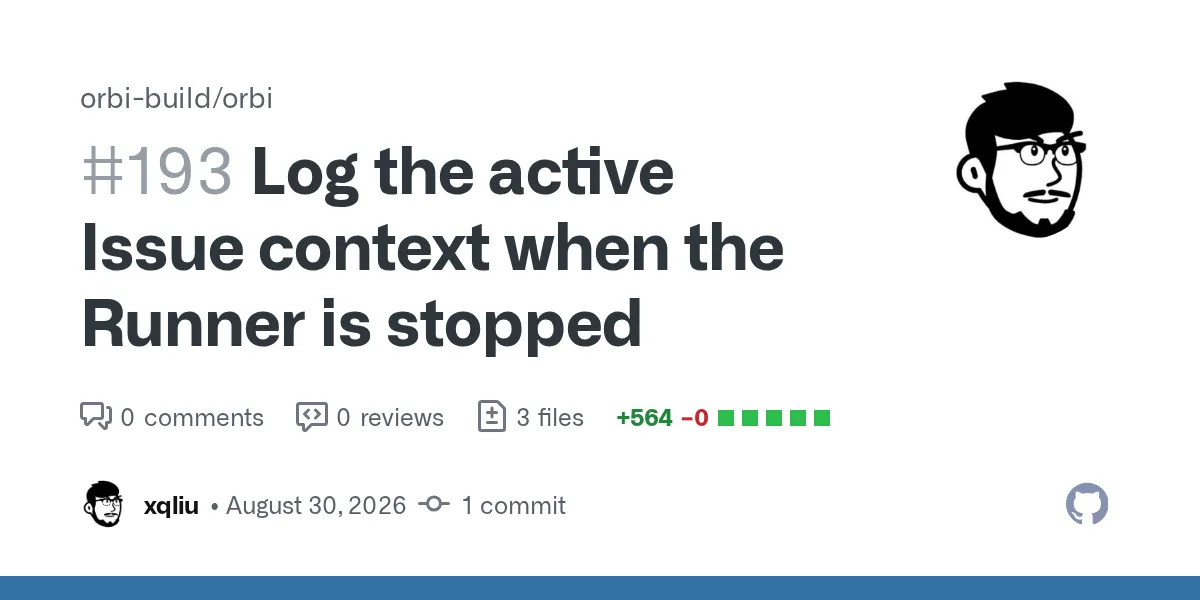
After the pull request opens, that tick ends. A later tick starts an independent Pi review session, which review_pi_* can put on a different model. It reviews the recorded base and head and fixes findings in that session. A clean verdict names the current pull request head. The merge gate then requires the latest base, concluded CI, a mergeable pull request, and an unchanged remote head. Pending CI waits. If a repository policy still blocks the merge, the Issue becomes ai-awaiting-merge, and the Runner merges the named head on a later empty-queue tick after the maintainer acts. The README says the AI never merges or pushes protected branches. The Runner is what calls the GitHub API once the gate passes.
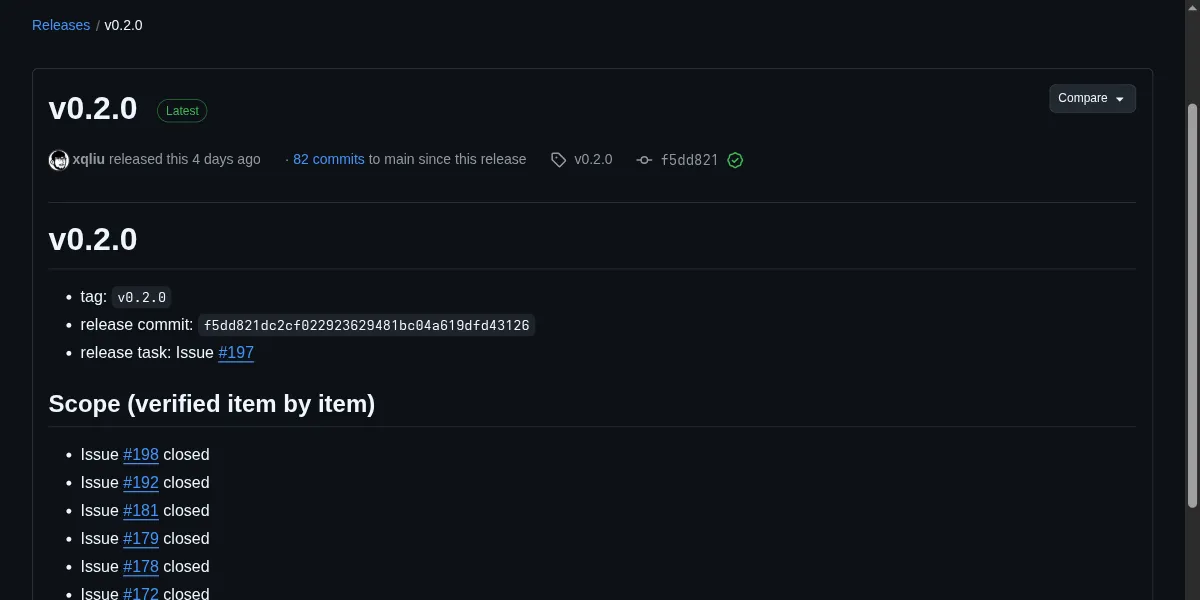
A recoverable failure labels the Issue ai-fix-needed and keeps the same run, branch, worktree, and pull request. An unrecoverable case, such as an exhausted review budget or a pull request closed without a merge, labels the Issue ai-blocked and the automatic loop stops. A missing worktree is rebuilt from the remote branch. Pickup order is P0-labeled Issues, then bug-labeled, then plain ai-ready. An Epic labeled ai-epic is never claimed. A release task, labeled ai-ready and ai-release, does not run Pi. You start it. The Runner waits on CI, publishes the tag, and writes the notes. max_concurrency is how many deliveries run at once. Orbi Managed Cloud runs the same ledger without you operating a runner.
You pick either license. Running Orbi on your own repositories, including changes and self-hosting, needs no extra authorization under either one. Under AGPL-3.0, offering a modified Orbi as a network service means publishing those changes. The Sustainable Use License v1.0 requires authorization to sell Orbi itself, such as hosting it for customers or embedding it in a paid product.
From the source
What the public materials show
Builder web analytics
Measure outcomes from Orbi-run agent work
Orbi implements a GitHub Issue and merges it after a separate review session. Separately configured product analytics can show the observed user-facing results of a change that delivery shipped.
This is an optional measurement workflow, not a native Orbi integration with Agent Analytics. Configure product tracking and authorized analytics access separately; the listing does not install tracking or report Orbi delivery activity.
First loop to measure
- an ai-ready Issue is implemented, a review session checks it, and the Runner merges when the gate passes
- the reviewed change is deployed to a separately instrumented project
- a human or an authorized agent reads observed product outcomes
- the team uses that evidence to choose the next task
How to install Agent Analytics on Orbi
If product tracking and analytics access are already configured, inspect the deployed change over an appropriate observation window. Report measured outcomes, missing evidence and limitations. Do not infer causation from before-and-after movement or treat Orbi delivery activity as product usage.